Low Vision Aids
Helping patients improve daily activities with advanced vision aids.
What is Low Vision?
Vision loss that cannot be corrected by ordinary eyeglasses, contact lenses, medication or surgery. A person with low vision has extremely limited sight that interferes with daily activities. You can still see something. And with the help of vision aids, you can stay independent.
- To preserve or restore vision.
- Significant field loss.
- Impaired function.
What Cause Low Vision?
Low vision can be caused by a number of diseases in the eye. An injury to the eye can also result in low vision. And some people are born with low vision.
- Stroke / brain injury.
- Retinitis pigmentosa.
- Optic Nerve disease.
- Albinism.
- Nystagmus.
- Cortical Visual Impairment.
What are the Symptoms?
The symptoms of low vision depend on the cause of the vision loss and where the problem is in the eye.
- Blank spots, dark spots or wavy lines in the centre of your vision.
- Blurred, hazy or cloudy vision or double vision.
- Loss of side (peripheral) vision or colour vision.
Goals of Low Vision Management
- Increase functionality - Make the most of remaining vision.
- Difficulty reading.
- Problems writing / completing paperwork.
- Inability to recognize distance objects and faces.
- Loss of peripheral vision (visual field).
- Reading may require adaptations.
- Mobility and independent travel.
- Need for additional lighting.
- Problems with glare and visual discomfort.
Functional Effects of Low Vision
- Increase functionality - Make the most of remaining vision.
- Provide link to community resources and support services.
- Education.
Staying Independent
Using vision aids can help you do the things you need and want to do. There are many kinds of vision aids. Low-vision centres and some doctors sell these aids. They also train you to use your aids and provide guidance about proper lighting.
Working with Your Eye Doctor
Your eye doctor will check your eyes and help you get the vision aids that will work best for you. You may be referred to a low-vision specialist who is trained to treat low vision. Many vision aids are designed to be used along with glasses.
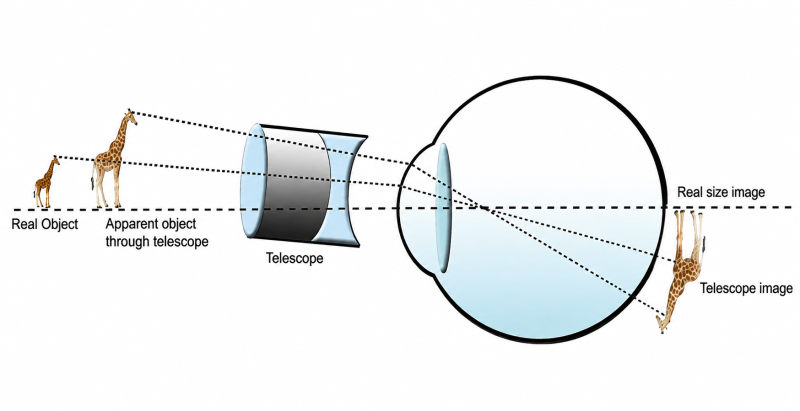
Magnification
- Enlarges image on retina to stimulate more retinal cells.
- Can be achieved in many ways.
- Relative Distance.
- Relative Size.
- Optical / Angular.
- Electronic.